energy · price cap · smart meters · bills
Energy meter reading: is there a national reading day?
There is no official national meter reading day. Four dates a year genuinely matter for your energy meter reading, and the next one is 30 September.
· 8 min read
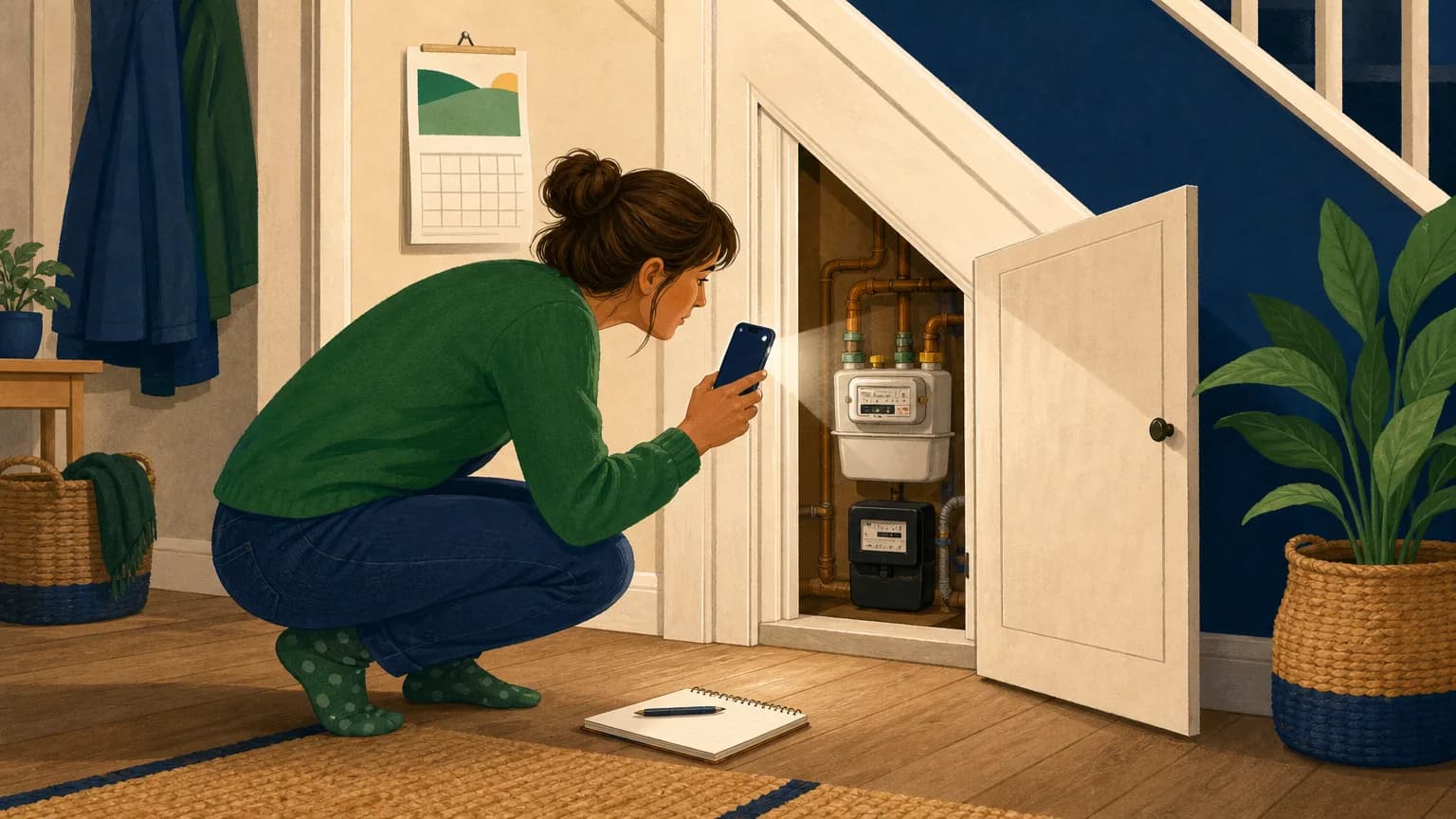
There is no official national meter reading day. Nobody at Ofgem or on GOV.UK has designated one, so the honest answer is that the dates worth putting in your diary are the last day of March, June, September and December — the day before each energy price cap change — and the next one is Tuesday 30 September 2026, when a fresh energy meter reading is genuinely worth five minutes of your evening.
The phrase caught on in March 2022, when advice bodies and debt charities urged people to read their meters on 31 March, the day before a very large price rise. It was a useful nudge, not a national institution, and it has quietly been repeated every year since.
The four dates that actually matter
Ofgem updates the energy price cap every three months. That means the cap changes on 1 January, 1 April, 1 July and 1 October.
So the useful "reading days" are the day before each of those:
- 31 December
- 31 March
- 30 June
- 30 September
Back in 2022 the cap only changed twice a year, which is why one date got all the attention. With quarterly updates, there are four moments a year when a reading draws a clean line between the old prices and the new ones.
Your next two after 30 September 2026: Ofgem has confirmed it will announce the cap for 1 January to 31 March 2027 on 25 November 2026, and the next one on 23 February 2027. So read your meter on 31 December 2026 and again on 31 March 2027.
Why a reading on cap day saves real money
If your supplier does not have an actual reading from around the changeover, it estimates. An estimate can push energy you burned in September into October's higher unit rate.
Ofgem announced on 26 August 2026 that the cap would rise by 4% from 1 October 2026, taking a typical direct debit dual-fuel household to £1,723 a year — up about £60 a year, or roughly £5 a month, from the £1,663 that applied from 1 July. On a chilly late-September week, having your usage sit on the right side of that line is worth a few pounds, not a fortune. It is still your few pounds.
Just as importantly, a reading tells you whether your monthly direct debit matches what you are actually using. Citizens Advice warns that where a shortfall builds up unnoticed, suppliers can raise your monthly payments to claw it back — which arrives as a nasty surprise mid-winter.
Take a photo of your meter on 30 September and send the reading to your supplier the same day.
How to take a reading that stands up
- Find your meter — usually a box in a hallway cupboard, under the stairs, or in an outside box.
- Write down the numbers left to right. Ignore anything after a decimal point or in a red box.
- Note which meter is which. Citizens Advice says that if the reading is followed by "m3" or "ft3", it is your gas meter.
- Take a dated photo on your phone showing the reading and the meter serial number. If the supplier's website falls over on the day, that photo is your evidence.
- Submit it the same day, through your supplier's app, website or phone line.
If you physically cannot get to your meter — it is too high, or you cannot bend or see well enough — tell your supplier. Citizens Advice says suppliers may be able to give extra help to read the meter or move it.
Prepayment customers pay in advance as they top up, so there is no reading to send.
If you have a smart meter, check it is actually smart
A smart meter in "smart mode" sends readings automatically, so you should not need to do anything. That is the theory.
In practice, plenty are not sending. Citizens Advice research reported in 2024 found around one in five households with a smart meter — roughly 2.86 million homes — were still submitting readings by hand because the meter was not sending them, and nearly a third reported problems with the in-home display.
Smart meters need to reach the wide area network — the mobile-style network they use to talk to your supplier — and that connection drops in some areas and some buildings. Citizens Advice advises that if yours is not sending, you submit your own reading once a month by app, website or phone.
The quick test: log into your account and look at your last few bills. If they say "estimated", your meter is not doing its job and you are back to doing it yourself.

If your bills say estimated, your smart meter may not be sending readings.
If the bill is wrong anyway: your 12-month protection
This is the rule most people do not know. Ofgem bans suppliers from back-billing domestic and microbusiness customers for energy used more than 12 months ago.
So if a bill lands for usage from two years back, you can challenge it. Citizens Advice explains the limits: the protection does not help you if the supplier did bill you accurately within the year and you simply did not pay, and Ofgem's exception covers cases where the customer prevented an accurate reading being taken — for example by blocking access to or tampering with the meter. The Energy Ombudsman puts it plainly that you have a responsibility to let your supplier get accurate readings.
Citizens Advice publishes a free letter template for challenging an out-of-time bill.
If your supplier will not budge, complain to it in writing first. The Energy Ombudsman can look at your case after eight weeks, or sooner if you receive a deadlock or final decision letter, and you must bring it within 12 months of the supplier's decision. The service is free, its decisions bind the supplier if you accept them, and the supplier then has 28 days to act.
Northern Ireland runs to different dates
Ofgem's price cap covers Great Britain only. In Northern Ireland, the Utility Regulator approves regulated tariffs, so your "reading day" tracks NI tariff change dates instead of Ofgem's quarters.
For example, the Utility Regulator confirmed on 29 May 2026 that Power NI's domestic electricity tariff would rise 6.2% (about £64 a year) and Firmus Energy's Ten Towns gas tariff 15.7% (about £132 a year) from 1 July 2026. Watch the Utility Regulator's announcements and read your meter the day before a change.
In England, Scotland and Wales the cap rates Ofgem publishes are averages — from 1 October to 31 December 2026, standard variable direct debit electricity averages 26.32p per kilowatt hour with a 54.83p daily standing charge — and your actual regional rate will differ.
Questions people ask
Is national meter reading day a real thing?
No. It is an informal campaign label from 31 March 2022, not an official date set by Ofgem, GOV.UK or any regulator.
Do I still need a reading if I'm on a fixed tariff?
Your unit rates do not change when the cap does, so cap day matters less. A reading every month or two is still worth it, so your direct debit stays close to your real usage.
Does the price cap mean my bill cannot go above £1,723?
No. Ofgem is clear the cap limits unit rates and standing charges, not the total bill — use more than a typical household and you pay more than the headline figure.
How often should I send a reading?
Citizens Advice suggests monthly if your smart meter is not sending readings automatically. Otherwise, the four cap-change days plus whenever you move home is a sensible minimum.
What if I miss 30 September?
Send one as soon as you remember and keep the dated photo. A reading a few days late is far better than an estimate, and you can ask your supplier to apportion usage.
What to do next
- Check your latest bill against the cap with our energy bill check, so you know whether you are being charged the right unit rate.
- Put the four reading days in your phone, and use our bills and contracts tracker so a price rise never arrives unannounced.
- Worried about paying? Start with the warm home check for grants, and the benefits finder for help you may not be claiming.
- If energy debt is already building, get free, independent advice from Citizens Advice, StepChange or National Debtline before you agree to anything. Our debt letter help page explains your rights first.
Where this comes from
- Energy price cap will rise by 4% from October 2026 — Ofgem
- Changes to energy price cap between 1 October and 31 December 2026 — Ofgem
- Ofgem bans suppliers from back-billing customers beyond 12 months
- Energy price cap — Ofgem
- If you haven't received an accurate energy bill in a while — Citizens Advice
- If you're having problems with your smart meter — Citizens Advice
- How to read your smart gas meter — Citizens Advice
- Complain to the Energy Ombudsman — Citizens Advice
Would this answer somebody else’s question too?