energy · bills · ofgem
Energy direct debit too high? How to get it cut
Suppliers reset monthly payments after each price cap change. Here's how to check the maths, ask for a lower direct debit, and get credit back.
· 8 min read
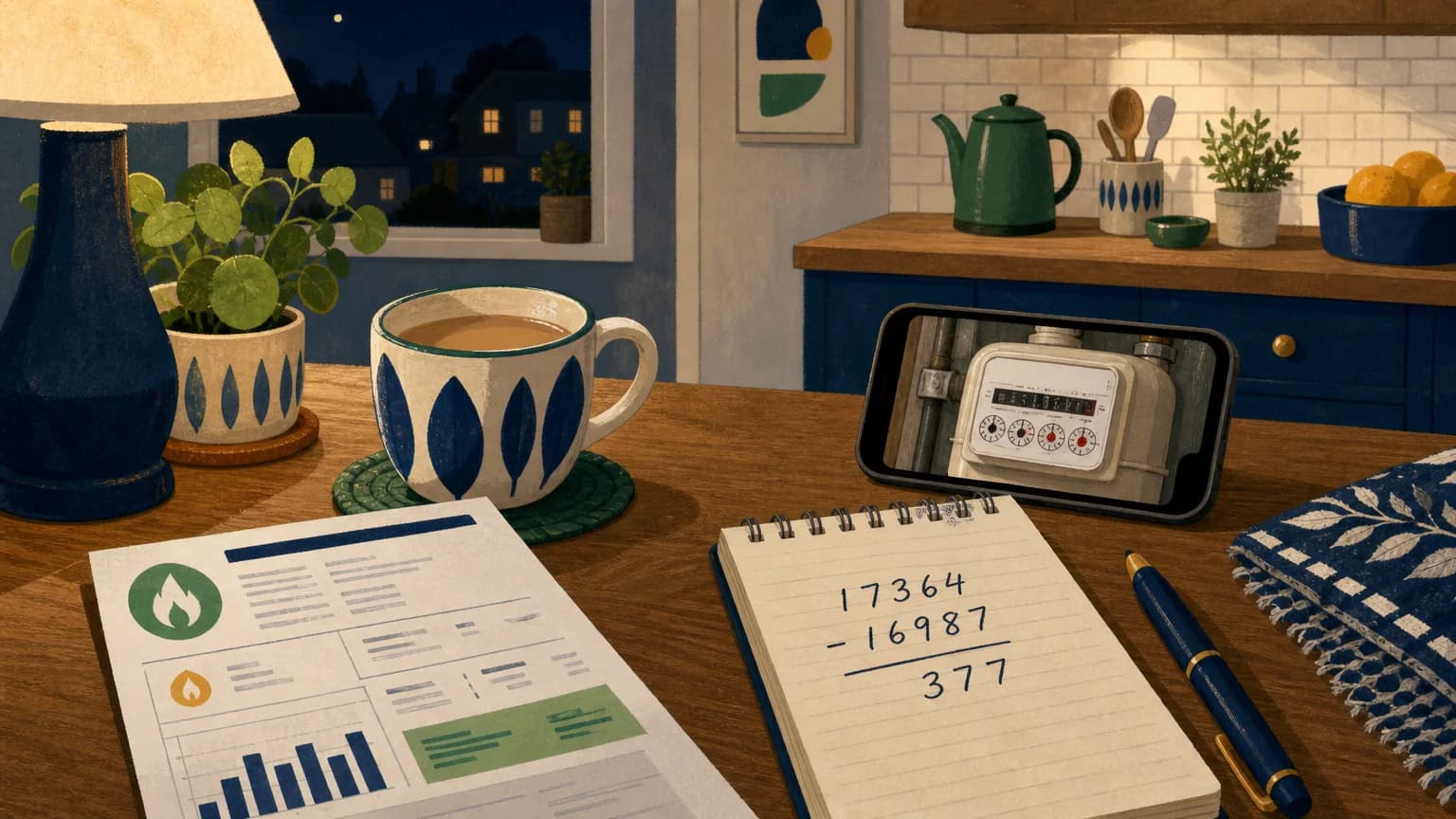
If your energy direct debit is too high, you can challenge it — your supplier has to base the amount on the best and most current information it has, and explain how it reached the figure. The fastest route is to send a meter reading, then ring and ask them to justify the new payment using that reading.
Why your monthly payment jumped after the cap change
A fixed direct debit is a guess spread evenly across the year. Your supplier estimates what you'll use over the next twelve months, prices it at your current rates, adds anything you already owe, and divides by twelve.
That's why payments get reset each time Ofgem's price cap changes, usually every three months. If the estimate is built on made-up meter readings, or on a cold year you don't recognise, the payment lands too high.
The other common reason is arrears. Citizens Advice gives a worked example: someone paying £70 a month with £300 of arrears, whose real usage is nearer £90 a month, might be moved to £120 a month — £90 for the energy, £30 chipping away at the debt — and dropped back to £90 once the debt clears. That's a fair increase, even though it stings.
The Ofgem rules on fair and clear direct debits
Suppliers licensed by Ofgem must set direct debits at a level that is fair and reasonable, based on the information they actually hold about your account. In July 2022 Ofgem published a compliance review into how twelve suppliers were setting direct debits and told them to improve, which tells you this is a rules matter, not a favour.
Citizens Advice is clear on your side of it: if your supplier increases your direct debit and you disagree, you can ask them to explain how they worked the figure out and to show you the meter readings they used. Those two things together are your strongest card.
In Northern Ireland there is no Ofgem price cap — energy there is regulated by the Utility Regulator, and the complaints route is different, as below.
Work out what you actually use in a year
Before you ring, spend ten minutes getting your own number. Then you're arguing with evidence rather than a feeling.
- Read your meter today and write the reading down with the date.
- Find a bill or statement from roughly twelve months ago and take the reading from that.
- Subtract one from the other. That's your kilowatt hours used in a year, for gas and electricity separately.
- Multiply by your current unit rate, then add the daily standing charge multiplied by 365. Ofgem publishes the current capped unit rates and standing charges on its "energy price cap unit rates and standing charges" page.
- Divide by twelve. That is roughly what your monthly payment should be if your balance is level.
If your gas meter reads in cubic metres, your bill shows the conversion — or just use the kilowatt hour totals printed on the bill.
One honest test while you're there: check the readings printed on your bill against what the meter says now. Estimated readings marked with an "E" are the single most common reason a payment is wrong in either direction.
Asking for a lower payment: what to say
Send an up-to-date meter reading first, then ring and ask them to explain how they calculated the new amount and which readings they used. An estimated account is the usual reason a reduction request gets refused.
Keep it short and factual. Something like:
- "I've just given you a reading. My actual use over the last twelve months was X kilowatt hours of electricity and Y of gas."
- "At my current rates that's about £Z a month."
- "Please explain how you arrived at £[new amount] and tell me which readings you used."
- "I'd like the payment reset to reflect my actual usage."
Write down the time, the name of the person you spoke to and what they agreed. If they say no, ask them to put the reason in writing — that's the start of your complaint file.
If you're behind on the account, say so plainly. Ofgem's rules require suppliers to offer a repayment plan you can actually afford, based on your income and outgoings, so ask for one rather than accepting a payment you'll miss.
Getting a credit balance refunded, and when a supplier can refuse
Being in credit in August is normal and by design — you're pre-paying for winter. The honest test is your balance at the end of March or in April. If it's still large then, you're paying more than you use.
Ofgem has a consumer page, "Are you owed money on your energy bill?", which sets out how to ask for credit back. In practice a supplier will usually want an up-to-date reading first, so send one before you ask.
A supplier can reasonably hold on to money if your account is on estimated readings, if the credit is genuinely there to cover the winter ahead, or if you owe them elsewhere on the account. What it should not do is refuse without explaining why. Ofgem has also been working on reforms to return credit balances automatically, so it's worth checking its page for the current position.
If you switch or move home, your old supplier should send a final bill and return any credit to you.

Summer credit is normal — judge your balance in March or April instead.
Complaining, and going to the Energy Ombudsman for free
If the supplier won't budge, Citizens Advice says the next step is a formal complaint. Put it in writing, use the word "complaint", and state what you want: the payment reset to a stated figure, and any excess credit refunded.
If your complaint isn't resolved within eight weeks — or you get a deadlock letter sooner — you can take it to the Energy Ombudsman. It is free to use, its decision binds the supplier but not you, and it covers England, Scotland and Wales. In Northern Ireland, take unresolved complaints to the Consumer Council for Northern Ireland instead.
While you're on the phone, ask about the Priority Services Register. It's free from every supplier and network operator and gives extra help if you're of pensionable age, disabled, have a long-term illness or young children.
Separately, the Direct Debit Guarantee run through the Bacs scheme means your bank must refund, immediately, anything taken in error, and you can cancel a direct debit at any time. Cancelling without agreeing something else, though, just builds arrears — treat it as a last resort.
When paying on receipt of bill makes more sense
Two alternatives are worth knowing about.
A variable direct debit means you pay for what you actually used that month. Citizens Advice notes bills are lower in summer and higher in winter, not every supplier offers it, and without a smart meter you'll need to send a reading every month. It suits people who would rather never hand over a penny in advance.
Paying on receipt of the bill — standard credit — gives you the same control, but the price cap allows suppliers to charge more for it than for direct debit, so budget for a higher unit rate. Check the current difference on Ofgem's cap pages before you move.
Also worth checking: Ofgem's back-billing rule means a supplier can't charge you for energy used more than twelve months ago if it never billed you properly for it. If a huge catch-up bill lands, say those words.
Questions people ask
My supplier increased my direct debit without warning — is that allowed?
They can change the amount, but they must tell you and be able to explain the basis for it. Ask them to show you the calculation and the meter readings behind it.
Can I just refuse and pay less?
You can cancel a direct debit at any time under the Direct Debit Guarantee, but the debt doesn't disappear. Agree a lower figure or a repayment plan instead, so you don't end up in arrears.
How much credit should I be carrying?
There's no fixed rule, but a balance roughly equal to one month's payment at the end of winter is reasonable. Anything much larger by April is worth asking about.
Does any of this apply in Scotland, Wales or Northern Ireland?
The Ofgem price cap and the Energy Ombudsman cover England, Scotland and Wales. Northern Ireland is regulated by the Utility Regulator, with complaints handled by the Consumer Council for Northern Ireland.
What if I can't afford the bill at all?
Ask your supplier for an affordable repayment plan and check whether you qualify for the Warm Home Discount on GOV.UK. Then get free help from Citizens Advice, StepChange or National Debtline — never pay a company for debt advice.
What to do next
Run your annual usage sum, then check the result against the current capped rates using our energy bill check. If the payment still looks wrong, use the phone script above — there's more of it on our haggle page.
If money is tight this winter, see warm home check for grants and the changes that save most, and benefits finder for anything you're not claiming. Behind already? Start at help with debt — free charity help only.
Where this comes from
- Citizens Advice — If your energy supplier has increased your direct debit payments
- Ofgem — Are you owed money on your energy bill?
- Ofgem — Energy price cap unit rates and standing charges
- Ofgem — Energy price cap: how it works
- Ofgem — Improvements sought from 12 suppliers on customer direct debit setting (July 2022)
- House of Commons Library — Regulation of customer credit retained by energy suppliers
- GOV.UK — Warm Home Discount Scheme
Would this answer somebody else’s question too?