council tax · household bills · benefits
Council tax band challenge: how to check and win
Thousands of homes sit in the wrong council tax band. Here is how to check yours for free, build the evidence and challenge it without getting caught out.
· 9 min read
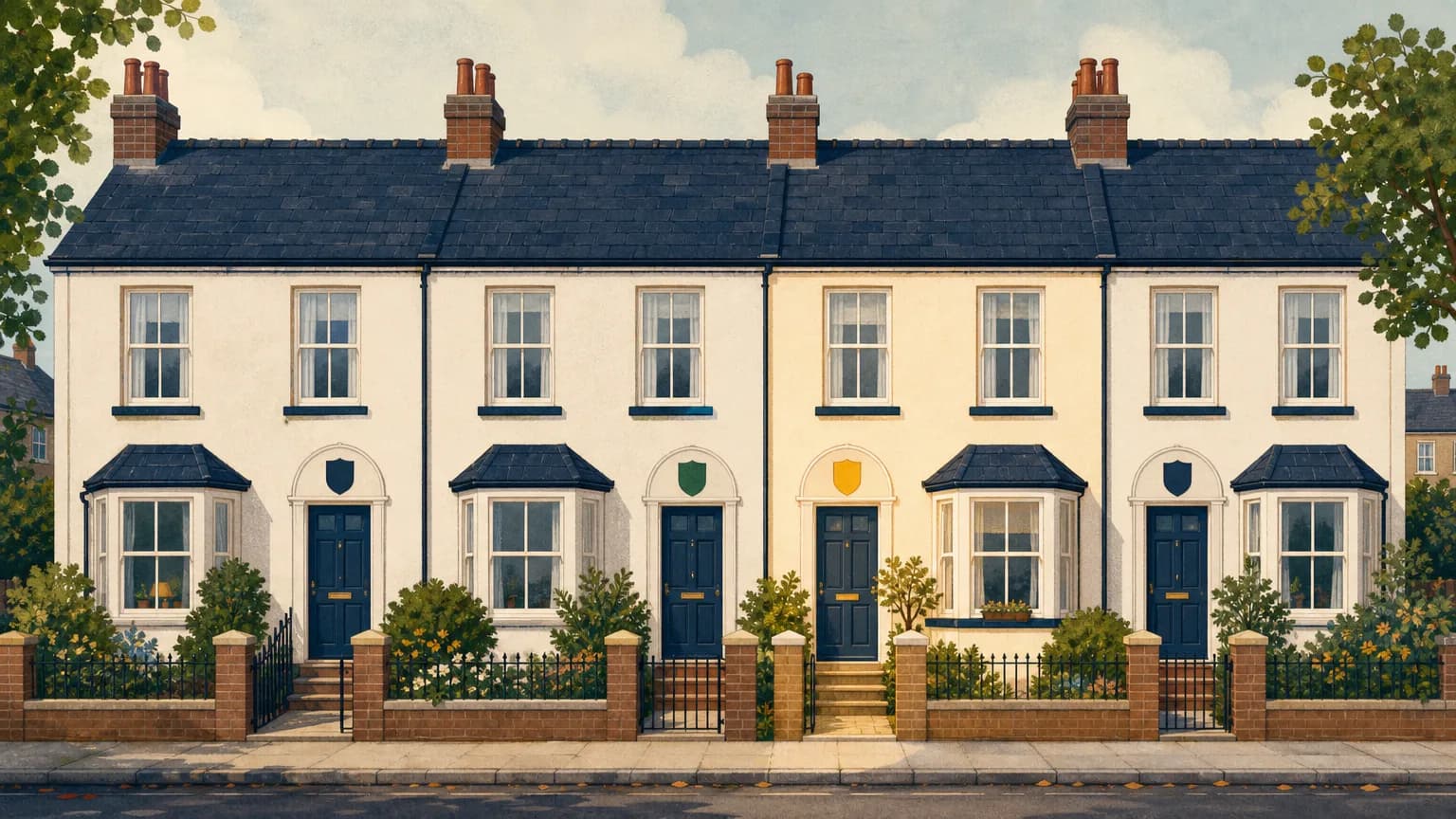
A council tax band challenge is free, you do it yourself, and if you win, your bill drops for as long as you live there — often with a refund for past years. But it is not a lottery ticket: the Valuation Office will only act if you can show the band is genuinely wrong, and a challenge can push your band up as well as down.
How your band was set, and why some are simply wrong
In England and Wales your home is banded by the Valuation Office, an agency of HM Revenue and Customs — not by your council. Your council only sets and collects the bill.
The band is based on what your home was worth on a date fixed in law. In England that date is 1 April 1991. In Wales it is 1 April 2003, with the current list taking effect from 1 April 2005.
England uses eight bands, A to H. Wales uses nine, A to I.
The original 1991 valuations were done at speed, sometimes from the pavement or the car window. That is why identical houses on the same street can sit in different bands to this day, and why council tax rebanding is worth a look before winter bills land.
Check my council tax band, and your neighbours', for free
Your band is printed on your bill. You can also look up any property in England or Wales free on GOV.UK, which means you can see what your neighbours pay without knocking on a single door.
Before you do anything else, check your own band and the bands of at least five similar homes nearby on GOV.UK — that comparison is the whole case. Citizens Advice notes you can also inspect the valuation list at your council's main offices, and sometimes at the library, though there may be a small charge there.
If you cannot use the online service, the Valuation Office helpline for England is 03000 501 501, and for Wales 03000 505 505.
One warning. Councils including Birmingham have reported cold-callers offering to "fix" your band and claim a refund for a fee. You never need to pay anyone. The official challenge costs nothing.
Gather the evidence before you contact anyone
The Valuation Office is clear on its own blog that a bill feeling too high is not a ground for challenge. You have to show the valuation list is wrong.
Two kinds of evidence work:
- Similar homes in a lower band. Look for properties of the same age, style and size, ideally on your street or estate. In rural areas you may need to search wider. Note the addresses and their bands.
- Sale prices that point to a lower 1991 or 2003 value. If homes like yours sold for a price that would have put them in a lower band on the valuation date, say so and show your working.
Write it down plainly: your address, your band, the comparable addresses, their bands, and one or two sentences on why yours should match theirs.
One quirk to expect. The Valuation Office is bound by taxpayer confidentiality and cannot tell you which comparable properties it used to reach its own decision, even where that information exists elsewhere.
How to make a council tax band challenge, step by step
There are two routes, and which one you get depends on how long you have been paying.
- Work out your route. If you have been paying council tax at the property for less than six months, or the Valuation Office changed your band in the last six months, you can make a formal proposal — and by law it must review your band. If you have been paying longer than six months, you get an informal band review, which it will only take forward if your evidence is strong.
- Start at gov.uk/challenge-council-tax-band. The online service is free. There is a paper form too; if you are acting for someone else, send an authority to act form with it or the challenge may be rejected as invalid.
- Attach your comparable addresses and any sale evidence.
- Keep paying your current bill. Your existing band stands until a decision is made, and falling behind turns a saving into arrears.
- Wait, then chase. Citizens Advice says that if the Valuation Office agrees to review, it usually writes with its decision within two months. Its own blog invites you to use the contact form if you have heard nothing after 90 days.
- If you win, the Valuation Office tells your council, which issues a new bill and revises your account for the relevant period — that is where backdated refunds come from.
If you made a formal proposal and disagree with the outcome, you can usually appeal to the independent Valuation Tribunal; your decision letter gives the deadline. You cannot appeal the outcome of an informal band review.
Brand new or newly converted homes that need banding for the first time go through your council, not the Valuation Office.
What happens if your band goes up instead of down
This is the part the adverts leave out. A review looks at whether your band is correct, not only whether it is too high, so it can go up.
In practice the risk is real but modest if your evidence shows neighbours in a lower band. It is much higher if your home is clearly bigger or more extended than the ones you are comparing it to.
Bands can also change for other reasons. An extension is a "material increase" that usually only bites when the property is next sold, while something that permanently reduces value can trigger a "material reduction".

Write down five comparable addresses and their bands before you contact anyone.
Discounts and exemptions people miss
A wrong band is not the only overcharge. Check these too:
- Single person discount. 25% off if you are the only adult aged 18 or over in your main home. It does not apply to a second home, or to someone only temporarily away for work or a holiday. Councils must review these discounts, so expect check-up letters, and giving false information is an offence under the Local Government Finance Act 1992.
- Students. A home lived in only by full-time students is exempt, including halls and shared houses. Students are also "disregarded", so a working adult living with students may get the 25% discount.
- Severe mental impairment. The legal test is a severe impairment of intelligence and social functioning that appears permanent. A doctor must certify it and the person must be entitled to a qualifying benefit. Conditions councils name include dementia, Alzheimer's, Parkinson's, stroke and severe learning difficulties. Someone living alone who qualifies can be fully exempt; where one of two adults qualifies, it is usually a 25% discount.
- Empty homes. Citizens Advice lists exemptions where a home is empty because the occupier has moved into hospital or a care home, moved in with relatives, or moved out to care for someone. But in England, since 1 April 2024 councils can charge a 100% premium — double the bill — once a home has been empty 12 months, with 12-month exceptions for major repairs and after probate.
- Second homes. From 1 April 2025 English councils can charge up to 100% extra on a furnished second home with no resident, under the House of Commons Library's explanation of the new rules. Scotland introduced a premium from April 2024 and Wales has had the power since 2017.
Council Tax Reduction if you are on a low income
Council Tax Reduction, sometimes called Council Tax Support, cuts the bill for people on a low income or certain benefits. You apply to your council, not to GOV.UK.
Age UK explains the split that catches people out: the scheme for people over State Pension age is the same everywhere, but the working-age scheme is designed locally, so what you get in one town differs from the next. Some councils cap working-age awards well below the full bill.
Apply as soon as you think you qualify. Some councils only award from the date they receive a valid claim and will not backdate. Only the person named on the bill can apply.
If you are refused, ask the council to look again, then use the appeal route it gives you.
Scotland, Wales and Northern Ireland work differently
In Scotland, bands are set by regional assessors rather than the Valuation Office, using 1 April 1991 values and bands A to H. Appeals go through the Scottish tribunal system, so start at your local assessor's website. Scottish bills also carry water and sewerage charges.
In Wales, the 2003 valuation date means the comparable evidence you need is from a different era, and the challenge form now covers Wales as well as England.
Northern Ireland has no council tax bands at all. Households pay domestic rates based on a capital valuation, administered by Land & Property Services, and challenges go through that route on nidirect.
Questions people ask
Can I really get a refund going back years?
Yes. If your band is lowered, the council revises your account for the relevant period, which can mean a refund covering the years you were overcharged at that address.
Will challenging my band annoy my neighbours?
A successful challenge on your home can lead the Valuation Office to look at similar properties nearby, and their bands could change too. It is worth a quiet word first if you live somewhere close-knit.
Do I have to keep paying while I wait?
Yes, and this matters. Your current band stands until a decision is made, and council tax arrears are a priority debt that councils can escalate quickly.
Should I pay a company to do this for me?
No. The challenge is free and the form is short. Firms that cold-call about "rebanding refunds" take a slice of money you could keep.
What if I am already behind on council tax?
Speak to your council straight away and get free advice from Citizens Advice, StepChange or National Debtline. None of them charge, and council tax arrears are treated as urgent because of the enforcement powers attached.
What to do next
Start with our council tax band check and challenge guide to look up your band and your neighbours' in a couple of minutes.
Then see whether you are missing a discount or Council Tax Reduction with the benefits finder. If you are behind on the bill, read debt letter help and your rights before you reply to anything.
More plain-English savings are in Helpful Tips.
Where this comes from
- Challenge your Council Tax band — GOV.UK
- Council Tax band challenge form — GOV.UK guidance
- Evidence to support your Council Tax band challenge — Valuation Office blog
- Council Tax band challenges — Valuation Office blog
- Check how council tax works and if you have to pay — Citizens Advice
- Why am I paying a council tax premium on my second home? — House of Commons Library
- Council Tax Reduction — Age UK
- Scottish Assessors — council tax bands and proposals
Would this answer somebody else’s question too?