cost of living · energy · inflation · bills
Cost of living crisis: what it is and how it happened
What the cost of living crisis is, how energy, water and food prices got here, and why falling inflation still leaves bills painfully high.
· 8 min read
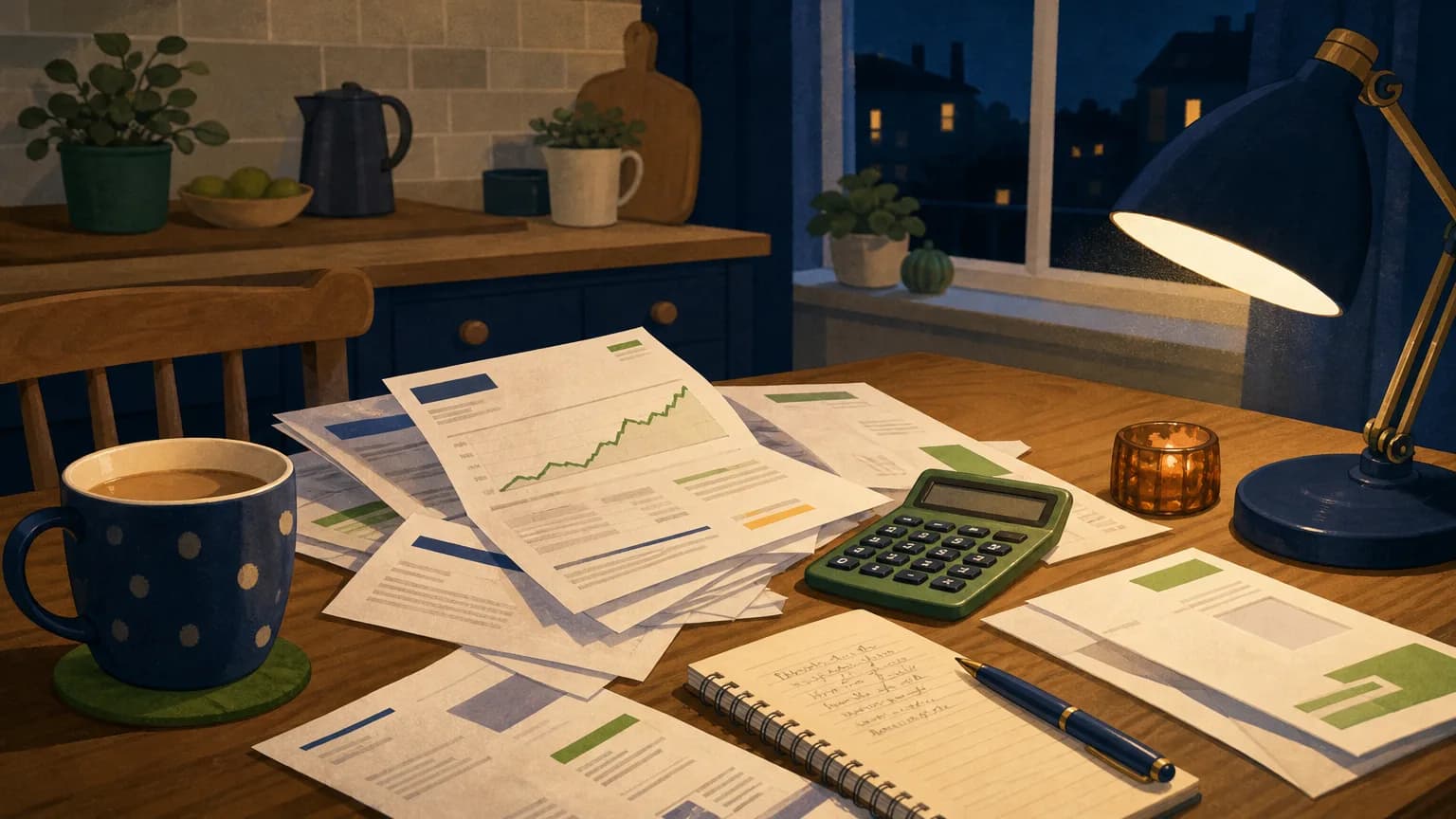
The cost of living crisis is the long stretch since 2021 in which the price of essentials — energy, food, water, rent, borrowing — rose much faster than most people's income, leaving households with less left over each month even when they earned more. It happened because a burst of global inflation, driven mainly by energy and food costs, pushed prices up sharply and permanently, and wages, benefits and savings never fully caught up.
What the phrase actually means
"Cost of living" is simply what it costs you to run your life: heating, lighting, food, water, travel, housing and the debts attached to them. A crisis happens when those costs climb faster than the money coming in.
Citizens Advice describes it as Britain's biggest cost-of-living crisis in decades, and says it has helped more people than ever before who cannot afford essentials such as food, energy and housing.
Its National Red Index measures how many people are in what it calls a negative budget — meaning that after essential spending there is nothing left, and the sums simply do not add up. Citizens Advice research has put around four million people in that position, with hundreds of thousands more on the edge of it.
How we got here, step by step
The crisis was not one event. It was a chain of them, each landing before households had recovered from the last.
- Supply chains seized up after the pandemic. Factories, ports and shipping restarted faster than they could cope with, so the cost of goods rose worldwide.
- Wholesale gas prices spiked. Demand rebounded and then Russia's invasion of Ukraine in 2022 disrupted European gas supply. Gas sets the price of much of Britain's electricity too, so both bills moved together.
- Food followed energy. Growing, chilling, processing and transporting food all take energy, and fertiliser is made from gas. Grocery prices rose hard and stayed up.
- Inflation peaked and then interest rates rose. The Bank of England raised its base rate to slow price rises, which pushed up mortgage and loan costs for anyone remortgaging or borrowing.
- Regulated bills caught up last. Water, council tax and broadband are set on annual or multi-year cycles, so their increases arrived after the worst of the inflation spike, not during it.
The House of Commons Library's inflation briefing shows how sharp the spike was: inflation hit double digits, and services inflation reached a 31-year high of 7.4% in 2023 before easing back.
Why falling inflation has not made you better off
This is the part that catches people out, and it is not your imagination.
Inflation is the rate prices are rising, not the prices themselves. The Office for National Statistics reported that the Consumer Prices Index rose by 2.9% in the 12 months to July 2026, up from 2.6% the month before.
A lower rate means prices are climbing more slowly. It does not mean they are going back down. The increases of 2022 and 2023 are baked into what you pay now, and each new year's rise sits on top of them.
So a household can be told inflation is "under control" while the weekly shop still costs a third more than it did a few years ago.
Where the cost of living crisis shows up on your bills
Energy
Ofgem reviews the price cap every three months, setting a maximum unit rate for each kilowatt hour and a maximum daily standing charge on the default tariff you land on when you are not on a fixed deal.
Ofgem is clear that the cap limits rates, not your total bill — use more, pay more. That single point causes more confusion than any other in energy.
The cap rose by 13% for 1 July to 30 September 2026, and Ofgem has announced a further 4% rise for a typical direct debit household for 1 October to 31 December 2026, with an average electricity rate of 26.32 pence per kilowatt hour on a standard variable tariff paid by direct debit.
Ofgem's next cap announcements are due on 25 November 2026 and 23 February 2027, so you can see a change coming rather than be surprised by it.
Water
Water UK put the average household bill increase for England and Wales at 5.4%, or about £33, for 2026-27 — much smaller than the roughly 27% jump the year before. Ofwat says the money supports a record £104 billion of investment in the sector to 2030.
Scotland and Northern Ireland work differently: Scottish Water charges are collected alongside council tax, and Northern Ireland households do not receive a separate domestic water bill.
If you are struggling, ask your water company directly about its social tariff and about WaterSure, which caps bills for some metered customers on benefits with high essential water use. Ofwat pushed companies to roughly double customer support over this five-year period, and none of it is automatic — you have to ask.
Food, council tax and contracts
Food prices rose faster than almost anything else during the worst of it, and shop prices rarely fall back once they have moved.
Council tax in England, Scotland and Wales has risen most years; Northern Ireland uses domestic rates instead. If your home was banded in 1991 and never checked, the band itself may be wrong.
For broadband and mobile, Ofcom now requires providers to tell you any mid-contract price rise in pounds and pence before you sign, rather than burying it in an inflation-linked formula. Ofcom also lists social tariffs — cheaper broadband and mobile deals for people on certain benefits.

Each year's rise sits on top of the last, which is why falling inflation still feels expensive.
What you can do about it this week
None of this is your fault, but a few checks genuinely move money back to your side of the table.
- Check your energy unit rate and standing charge against Ofgem's current cap figures, then send a meter reading, so you are billed on real usage rather than an estimate.
- Ring your energy and water suppliers and ask what hardship support, social tariff or repayment plan they offer. They will not offer it unprompted.
- Check whether you are missing benefits or a council tax reduction. Millions of pounds go unclaimed every year.
- Ask your council about local crisis or household support funding — schemes vary by area and change often.
- If debt is the problem, speak to StepChange, National Debtline or Citizens Advice. They are free, independent and will never charge you.
In England and Wales, Breathing Space gives eligible people 60 days of protection from most interest, fees and enforcement while they get advice. Scotland has its own statutory moratorium, and one of those charities will tell you which applies to you.
Questions people ask
When did the cost of living crisis start?
Most people date it to late 2021, when energy and goods prices began climbing sharply, with the worst of it through 2022 and 2023. The House of Commons Library's inflation data shows the peak in that period before the rate eased.
Is the cost of living crisis over?
The rate of price rises has slowed a long way from its peak, but prices themselves have not come down. With the Office for National Statistics reporting inflation at 2.9% in the year to July 2026, essentials are still getting dearer, just more slowly.
Does the energy price cap mean my bill cannot go above a set amount?
No. Ofgem's cap limits the unit rate and the daily standing charge, not the total, so a large or poorly insulated home can pay far more than the "typical household" figure quoted in the news.
Why are water bills rising when inflation has fallen?
Water bills are set by Ofwat in multi-year price reviews, not month by month, so they follow their own cycle. The current rises fund the £104 billion investment programme Ofwat approved for 2025 to 2030 in England and Wales.
Where can I get free help if I cannot pay?
StepChange, National Debtline and Citizens Advice all give free, confidential debt advice, and none of them will sell you anything. Contact them before you miss a payment if you can — options are wider early on.
What to do next
Start with the bill that hurts most. Run your energy statement through the energy bill check to see how it compares with the price cap, then see whether you are missing money you are owed with the benefits finder.
If your home was banded decades ago, the council tax band check is a ten-minute job that occasionally pays back years. For contract rises you did not agree to, keep an eye on bills and contracts, and if letters are piling up, read debt letter help for your rights and the free charities to call.
Where this comes from
- Energy price cap — Ofgem
- Changes to the energy price cap between 1 October and 31 December 2026 — Ofgem
- Consumer price inflation, UK — Office for National Statistics
- Ofwat responds to water sector average bill figures
- Cost of living — Citizens Advice
- Inflation in the UK: economic indicators — House of Commons Library
- Record investment: average household water bills rise £33 a year from April — Water UK
- Debt Respite Scheme (Breathing Space) guidance — GOV.UK
Would this answer somebody else’s question too?