energy · heating · boiler · winter
Boiler flow temperature: turn it down, not off
A free 10-minute change to your boiler flow temperature and heating controls can cut gas use without making your home colder. Here's exactly what to set.
· 8 min read
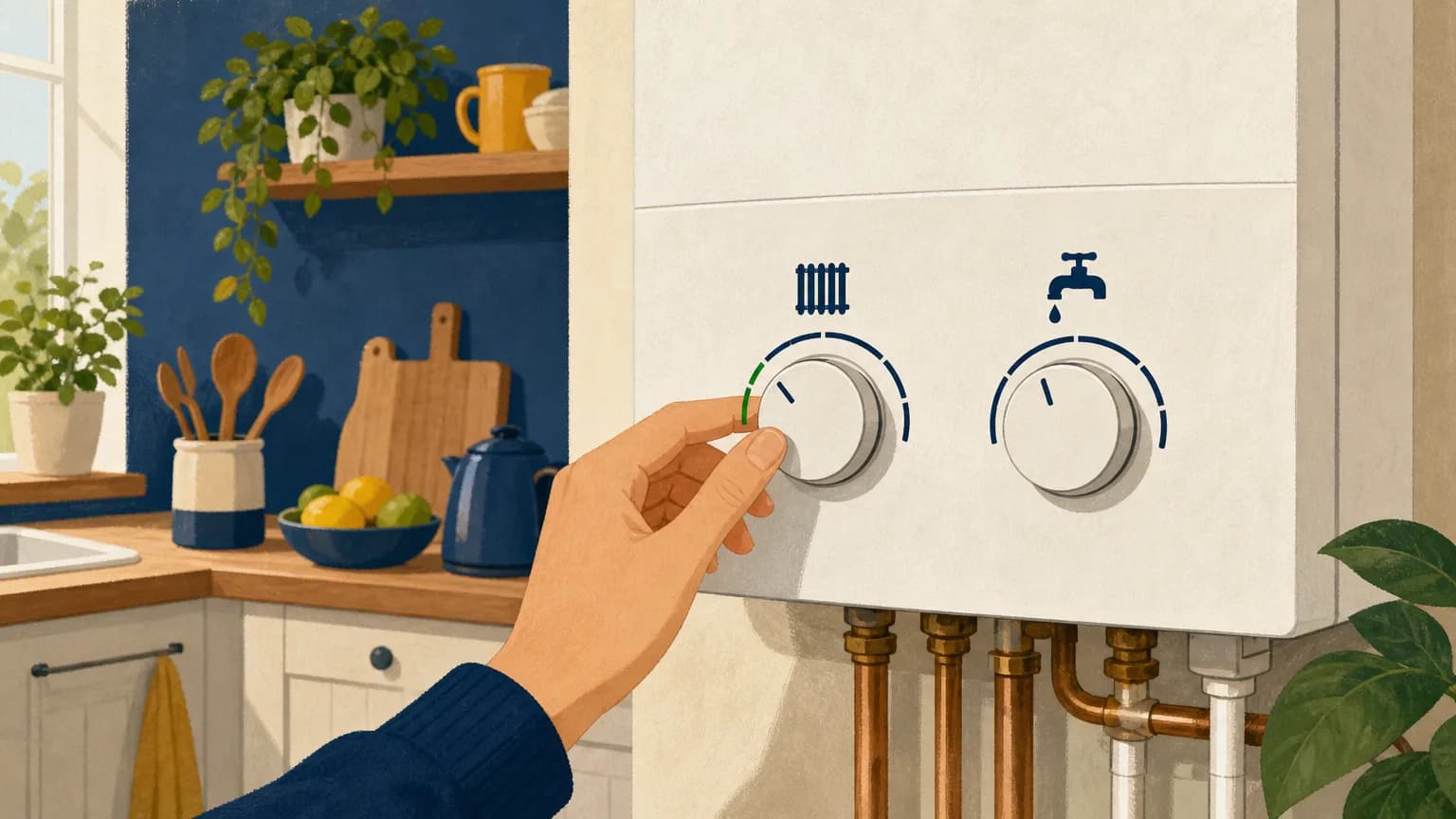
If you have a modern condensing combi boiler, turning the boiler flow temperature down to around 60°C is usually free, takes about ten minutes, and can cut the gas you burn without making your home any colder. It is not the same as turning your thermostat down, and it does not mean going cold — your rooms still reach the temperature you set, the boiler just gets there more efficiently.
Flow temperature and thermostat temperature are not the same thing
These two get mixed up constantly, and the confusion costs people money.
- Flow temperature is how hot the water is when it leaves your boiler and goes round your radiators. It's set by a dial or menu on the boiler itself, usually marked with a little radiator symbol.
- Room thermostat temperature is how warm the air in your room gets before the heating switches off. That's the dial or screen on the wall, or on an app.
Turning the thermostat down makes your house cooler. Turning the flow temperature down does not — it makes the radiators a bit less scorching, so they take slightly longer to warm the room, but the room still reaches the same temperature and the boiler runs more efficiently getting there.
Why a lower flow temperature cuts gas with no loss of warmth
Almost every boiler fitted in the last twenty years is a condensing boiler. Building regulations across the UK have required them in new installations since the mid-2000s, with slightly different dates in England and Wales, Scotland and Northern Ireland.
A condensing boiler is designed to pull extra heat out of its own exhaust gases. It can only do that when the water coming back from your radiators is cool enough — and that only happens when the water going out isn't blisteringly hot. Run it at 75°C or 80°C, as many are left on out of the box, and it never condenses properly. You are paying for heat that goes out of the flue.
The Energy Saving Trust has a whole page on this — Should I turn my boiler's flow temperature down? — and the independent charity Nesta has run research trials on lowering flow temperatures, finding households cut gas use while staying comfortable. Nesta is a charity, not a boiler seller, which is why we're pointing at them rather than the many companies quoting big percentages.
The dial to turn, the number to aim for, and when to leave it alone
On most combi boilers there are two dials or two menu settings: one with a radiator symbol (central heating) and one with a tap symbol (hot water).
- Find the radiator dial, not the tap one.
- Turn the central heating flow temperature down to around 60°C — the Energy Saving Trust suggests 60°C or below for a combi.
- Leave it a couple of cold days. If rooms take too long to warm up, nudge it up by 5°C at a time until you're comfortable. You have lost nothing.
- Leave the hot water (tap) dial where it is, set to a comfortable, non-scalding temperature.
When not to touch it
- You have a hot water cylinder (a system or regular boiler with a tank in the airing cupboard). Stored hot water normally needs to reach around 60°C to control legionella bacteria, as the Health and Safety Executive explains. That cylinder setting is separate from your radiator flow temperature — don't drop it.
- You have a heat pump. Flow temperatures on heat pumps are set by the installer as part of the system design. Ask them, don't guess.
- You rent. You can usually adjust controls, but if anything is locked, sealed or you're unsure, ask your landlord first.
- The boiler is old, non-condensing or you can't identify the dials. Leave it and ask a Gas Safe registered engineer at your next service.
Thermostat, timer and radiator valves: the order to set them in
Do these in order. Each one only works properly if the one before it is right.
- Room thermostat first. NHS cold weather advice is to heat the rooms you use to at least 18°C. Somewhere between 18°C and 21°C suits most households — try the lowest number you're genuinely comfortable in, and add a jumper before you add a degree. This is the best thermostat setting to save money because every degree you don't ask for is gas you don't buy.
- Timer or programmer second. Set the heating to come on shortly before you need it and go off before you leave or go to bed. A house at a steady, sensible temperature on a timer generally costs less than one blasted hot twice a day.
- Radiator valve settings last. Thermostatic radiator valves let you set different rooms differently — cooler in bedrooms, warmer in the living room. The numbers on the valve are not a standard scale; 3 on one brand is not 3 on another. Set by feel over a few days rather than by the number.
The Energy Saving Trust's heating controls advice covers all three, and it's worth ten minutes on their site if your controls are unfamiliar.

Turn unused rooms low or to frost setting rather than fully off.
Rooms you use and rooms you don't
This is where people go wrong, usually with good intentions.
Turning a radiator in a spare room fully off can leave that room cold enough for condensation and damp to take hold, which costs far more to fix than the gas you saved. The usual advice is to turn unused rooms down low, or to the frost setting, and keep the door shut.
Heating one room with an electric heater instead of the whole house is not the automatic win it sounds like either. Electricity costs several times more per unit than gas under Ofgem's price cap, so a plug-in heater running for hours can easily cost more than gas central heating for the same warmth. It can make sense if you genuinely occupy one room for a short spell — it rarely makes sense as a whole-winter strategy. The Energy Saving Trust's heating advice is the place to check this for your own set-up.
When it's a repair job, not a settings job
Settings won't fix a broken system. Treat these as repair jobs:
- Radiators cold at the top (needs bleeding) or cold at the bottom (possible sludge).
- Boiler pressure repeatedly dropping, or the boiler locking out with an error code.
- Rooms that never reach the thermostat setting however long the heating runs.
- Any smell of gas, or a suspected carbon monoxide leak. Call the National Gas Emergency Service on 0800 111 999, open windows and get out. Carbon monoxide has no smell — headaches, dizziness and nausea that improve when you leave the house are warning signs.
Landlords must arrange an annual gas safety check by a Gas Safe registered engineer under the Gas Safety (Installation and Use) Regulations 1998. If you own your home you aren't legally required to, but an annual service is sensible.
If you pay for boiler cover, check what you actually bought. Cover is a regulated insurance product, so you normally get a 14-day cooling-off period, and if a claim is unfairly refused you can complain and then take it to the Financial Ombudsman Service free of charge. Repairs by a trader are covered by the Consumer Rights Act 2015, which says work must be done with reasonable care and skill.
Questions people ask
What temperature should my combi boiler be?
For central heating, the Energy Saving Trust suggests a flow temperature of around 60°C or below on a combi, which lets a condensing boiler run efficiently. The hot water tap setting is separate — leave it at a comfortable, non-scalding temperature.
Will a lower flow temperature make my house cold?
No. Rooms still reach whatever your thermostat is set to; they may just take a little longer on the coldest days, in which case nudge the flow temperature back up 5°C at a time.
Is it cheaper to leave the heating on low all day?
For most homes, heating on a timer for the hours you're in costs less than running all day. A well-insulated home holds heat longer, so the gap narrows — the Energy Saving Trust's heating advice covers the exceptions.
What if I can't afford to heat my home at all?
Tell your supplier before you fall behind. Ofgem's rules require suppliers to offer an affordable payment plan, and the free Priority Services Register gives extra support if you're a pensioner, have a disability or have young children.
Where do I get free help with energy debt?
Citizens Advice, StepChange and National Debtline are all free, independent and used to this. Never pay a company to do what they do for nothing.
What to do next
Do the boiler dial today, then check the bigger picture:
- Run a warm home check to see which grants and improvements would save you most.
- Compare your bill against the cap with our energy bill check — remember Ofgem's cap limits unit rates and standing charges, not your total bill, and it changes every three months.
- Struggling with arrears? Start at help with debt for your rights and the free charities.
- More plain-English savings in Helpful Tips.
Where this comes from
- Should I turn my boiler's flow temperature down? — Energy Saving Trust
- Thermostats and heating controls — Energy Saving Trust
- Heating your home — Energy Saving Trust
- Changes to the energy price cap between 1 January and 31 March 2026 — Ofgem
- Getting extra help through the Priority Services Register — Ofgem
- The impact of boiler optimisation on gas consumption and household comfort — Nesta
- Lowering boiler flow temperature to reduce emissions — Nesta
- Landlords' gas safety duties — Health and Safety Executive
Would this answer somebody else’s question too?